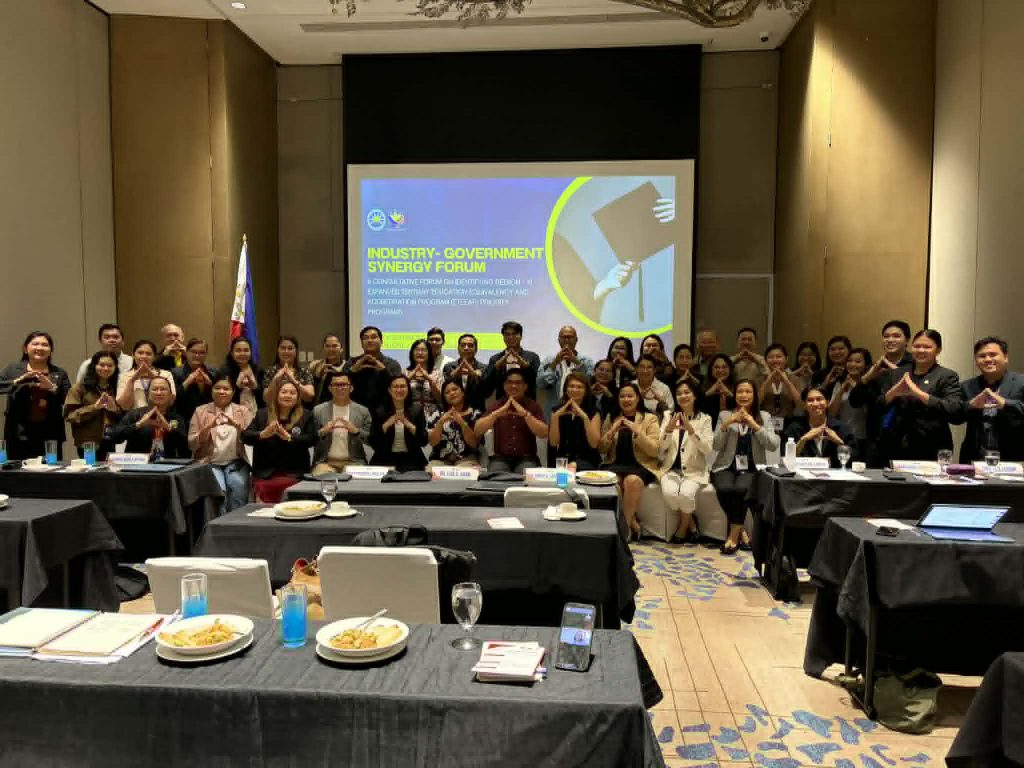
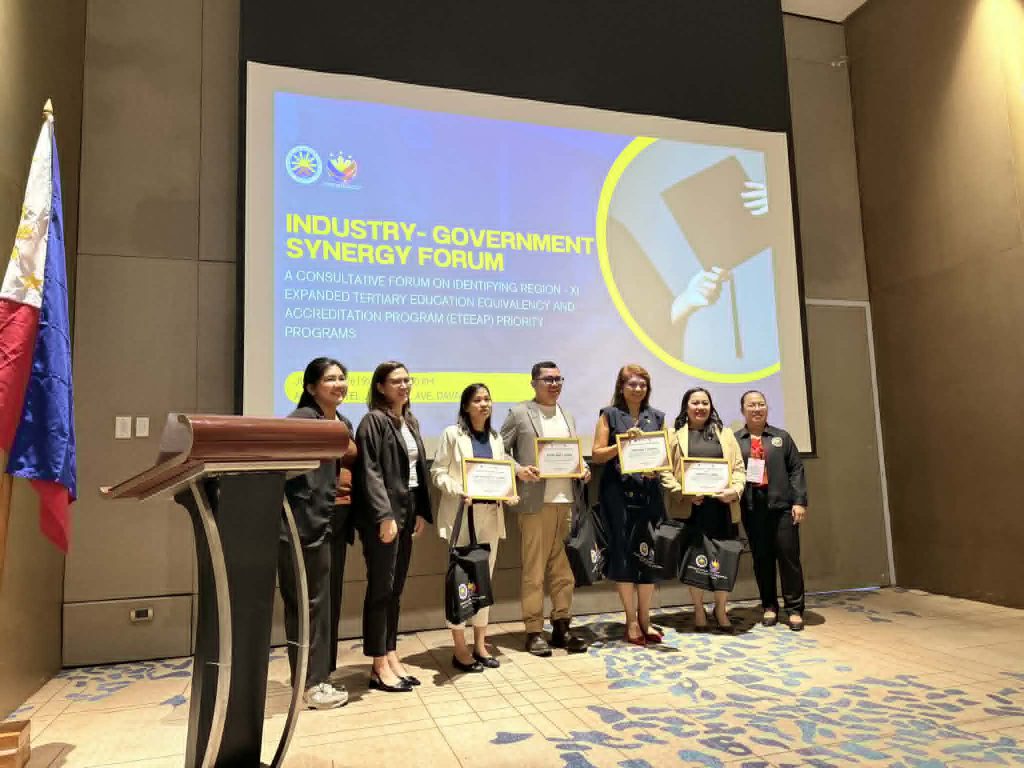
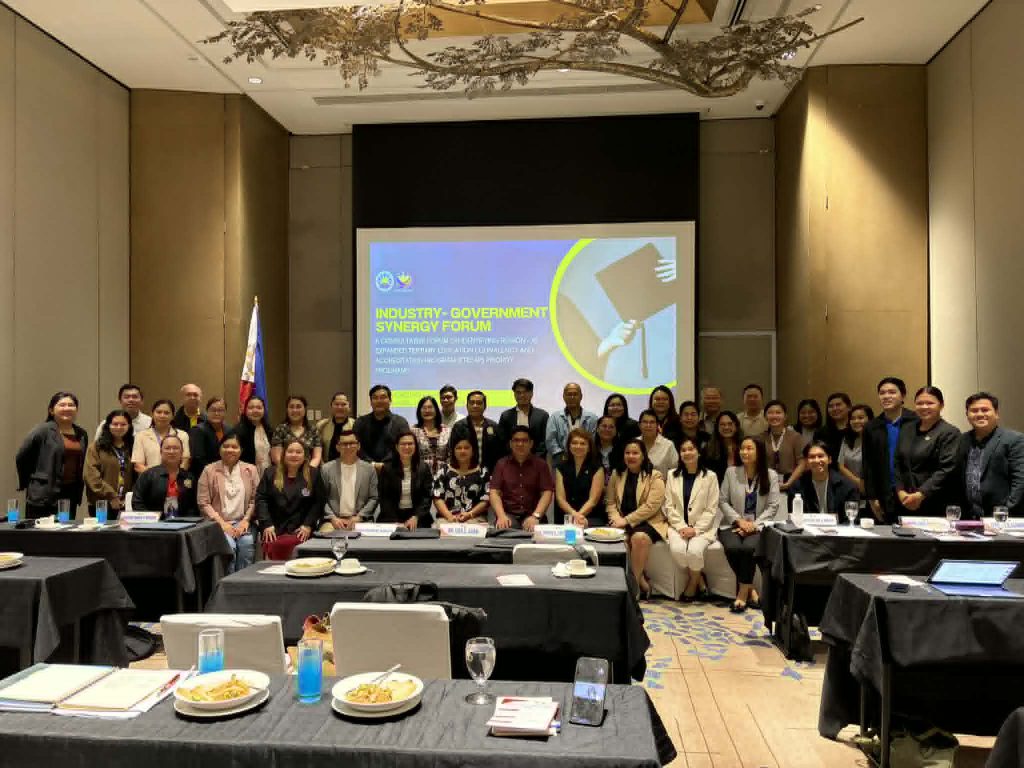
The Industry-Government Synergy Forum commenced with opening preliminaries followed by the opening remarks of Dr. Jimmy G. Catanes, CESO IV, Director IV of the Office of Programs and Standards Development (OPSD), Commission on Higher Education (CHED), and the rationale delivered by Ms. Maria Bonjeavem C. Alger, Chief Administrative Officer of CHED Regional Office XI.
Dr. Maria Christina B. Condez, Education Supervisor II and ETEEAP Focal Person of CHED RO XI, discussed the Enhanced Tertiary Education Equivalency and Accreditation Program (ETEEAP) mandate and the ACHIEVE Priority Sectors, highlighting the significance of alternative learning pathways in expanding access to higher education for working professionals.
Representatives from the Department of Labor and Employment (DOLE XI), Technical Education and Skills Development Authority (TESDA XI), and Department of Migrant Workers (DMW XI) presented updates on regional labor market trends, workforce demands, priority industries, and skills requirements that support regional economic growth and employment generation.
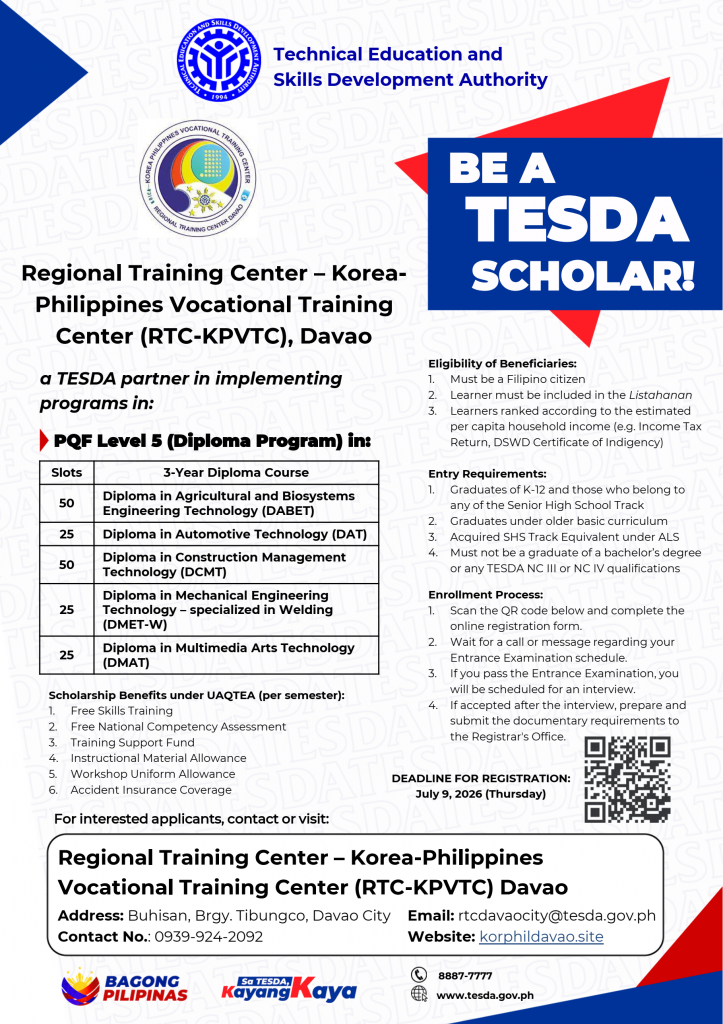
Representing TESDA Region XI through the Regional Training Center–Korea Philippines Vocational Training Center (RTC-KPVTC), Davao, Dr. Jestony Mark P. Aprong, Senior TESD Specialist, delivered the presentation entitled “Building the Lifelong Learning Pipeline in Region XI through TESDA-CHED ETEEAP Synergy.” The presentation introduced a proposed lifelong learning pipeline that integrates TESDA’s Recognition of Prior Learning (RPL) framework with CHED’s Enhanced Tertiary Education Equivalency and Accreditation Program (ETEEAP), creating a seamless pathway from industry experience and vocational qualifications to higher education degree programs.
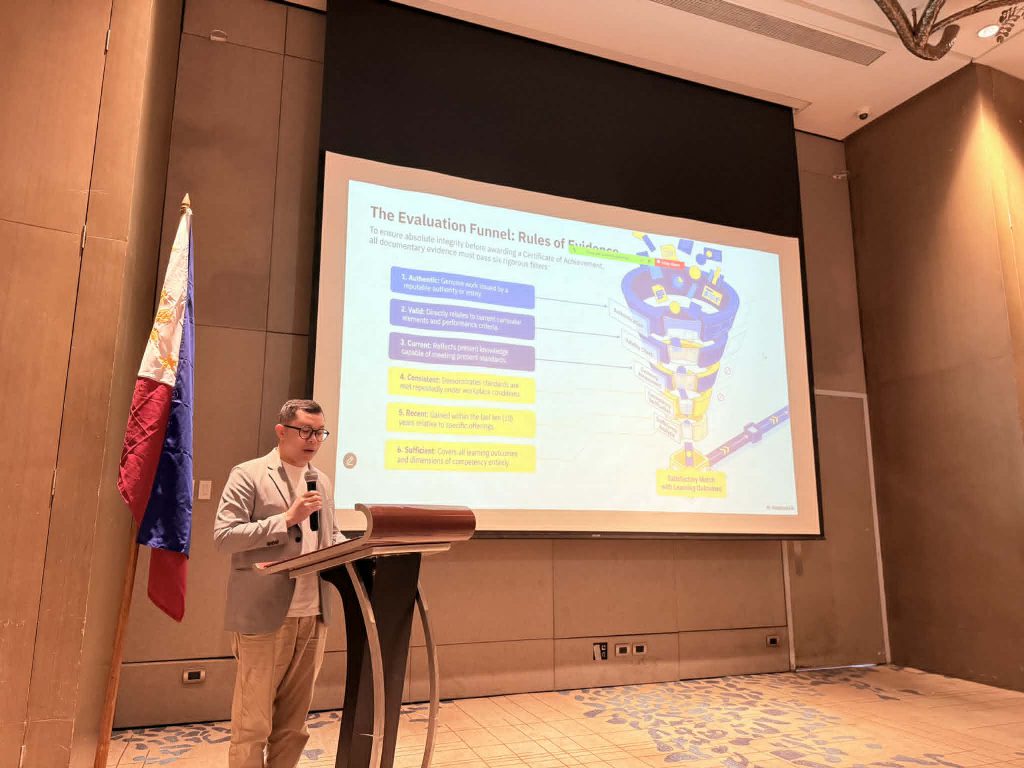
The presentation highlighted the legal and policy foundations of educational mobility, including the Philippine Qualifications Framework (PQF), TESDA Circular No. 090-2021 on Recognition of Prior Learning, and Republic Act No. 12124 institutionalizing ETEEAP. Emphasis was likewise given to the TESDA-to-CHED Crosswalk Framework, demonstrating how National Certificates (NCs), TVET Diplomas, and validated workplace competencies may be recognized and credited toward degree programs.
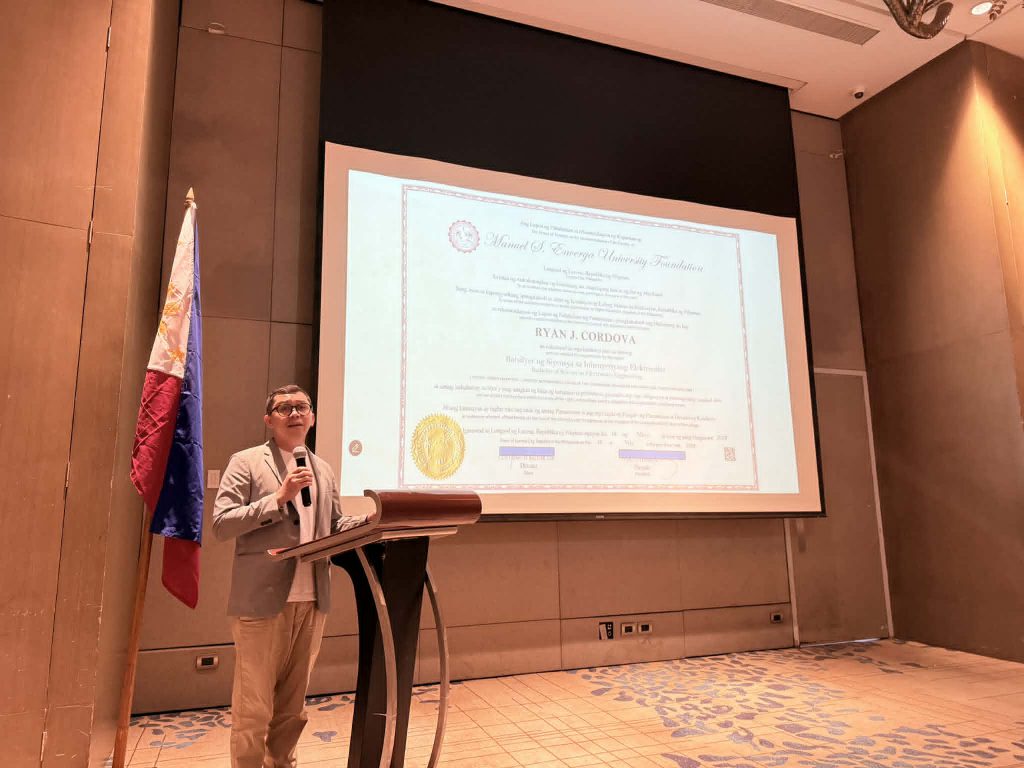
Moreover, the presentation showcased workforce alignment strategies for Region XI’s priority sectors, including ICT-BPM, agriculture, construction, tourism, caregiving, renewable energy, and enterprise-based training. A proof-of-concept case featuring Mr. Ryan J. Cordova was also presented, illustrating how TESDA-acquired competencies and work experience may be credited toward the completion of a bachelor’s degree through ETEEAP.