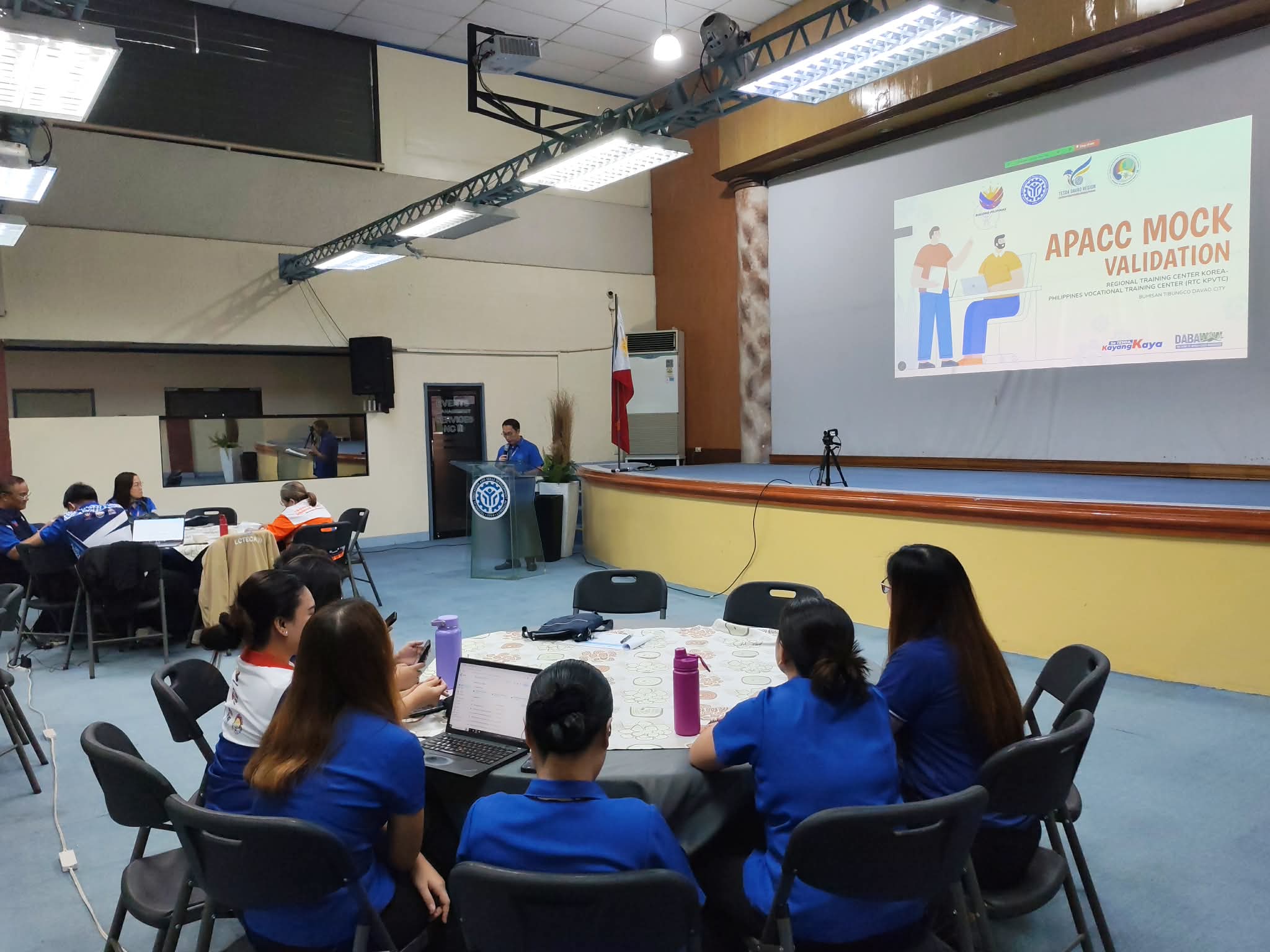
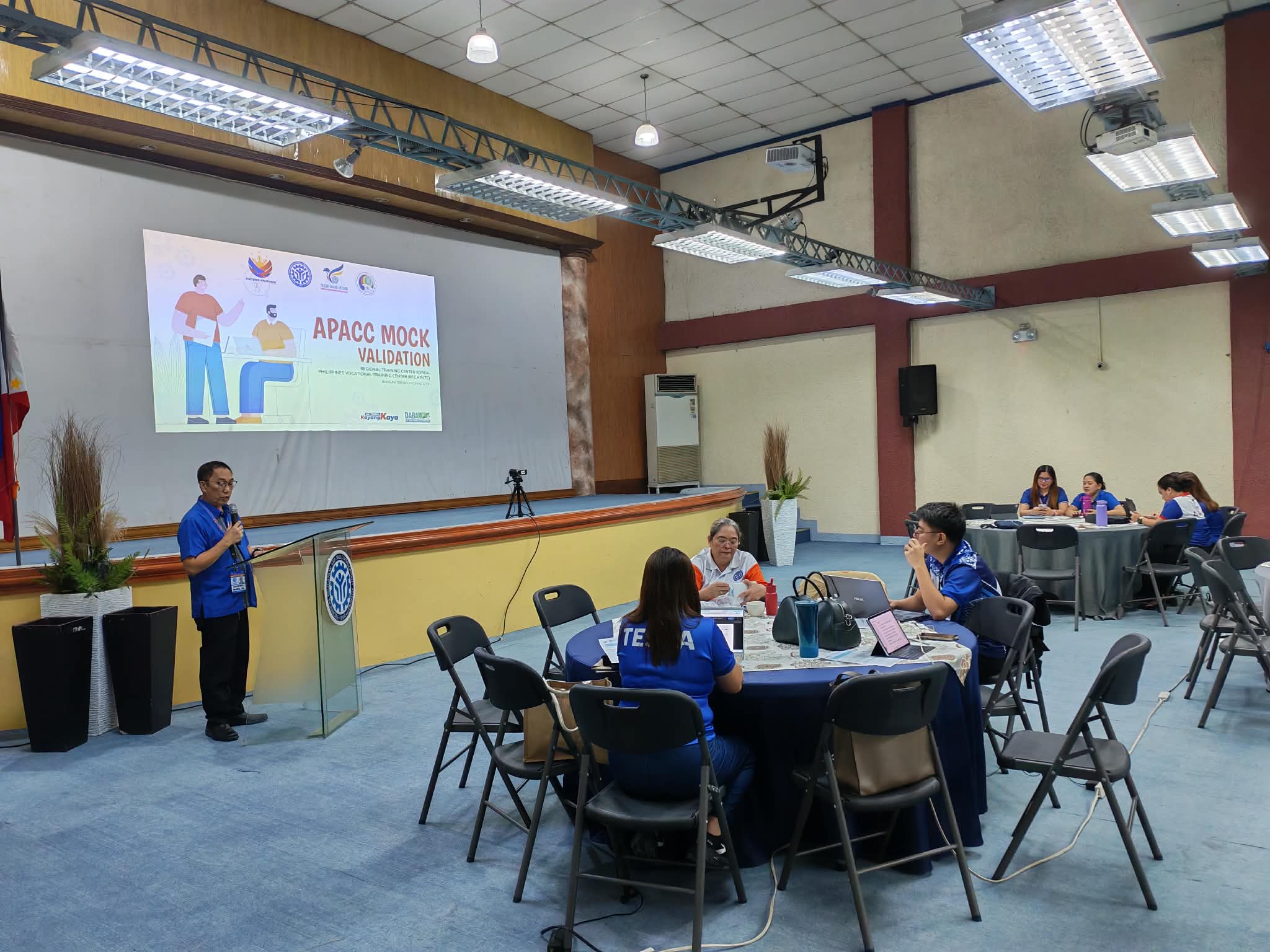
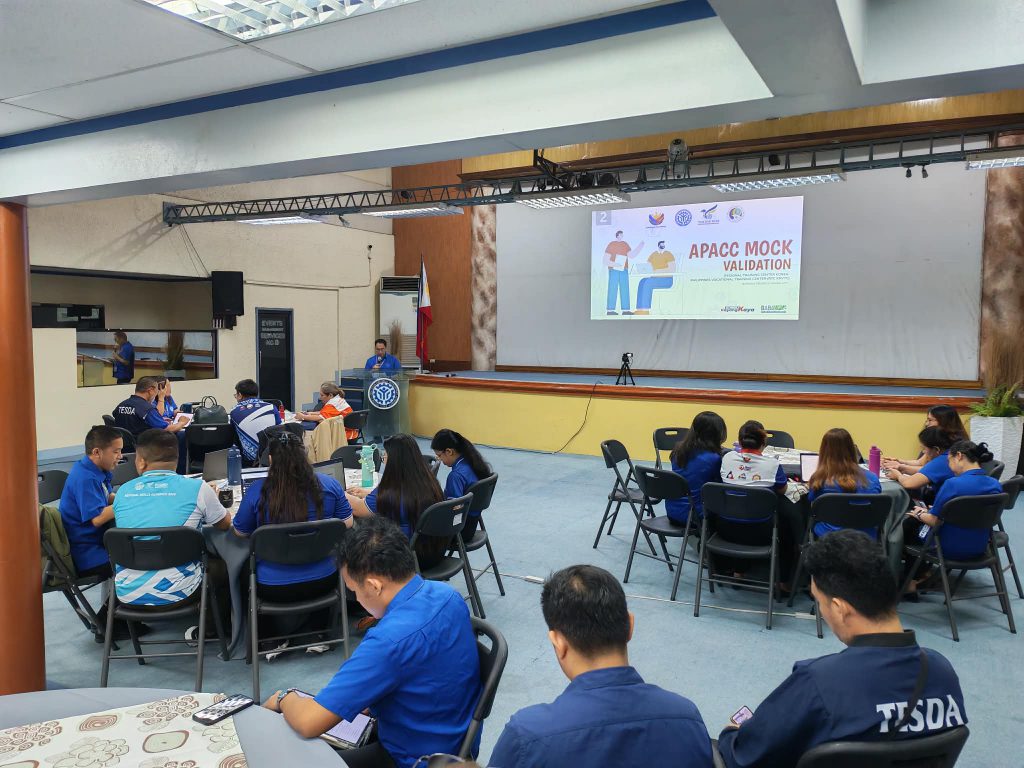
The APACC Mock Validation aimed to assess the level of readiness of RTC-KPVTC, Davao for the actual Asia Pacific Accreditation and Certification Commission (APACC) On-Site Validation that is scheduled on August 18-20, 2026. Specifically, it sought to validate the completeness, accuracy, and quality of the documentary evidence compiled under each of the seven (7) APACC criteria, to identify gaps and areas for improvement in the documentation and presentation of evidence, to strengthen the capability of the Criterion Working Group Leaders (WGLs) and their members in presenting and defending their assigned criterion before accreditors, and to recommend concrete actions to be undertaken prior to the actual accreditation visit.
The activity was participated in by the mock accreditors from TESDA Regional Office XI and various heads of other TESDA Operating Units (OUs). The primary beneficiaries are the members of the RTC-KPVTC, Davao APACC Accreditation Team, namely the Center Administrator, the APACC Team Leader, the seven (7) WGLs for the APACC Criterions and their respective members, the designated Shepherds, and the RTC-KPVTC APACC Secretariat.
RTC-KPVTC, Davao hosted the APACC Mock Validation on August 4-6, 2026 at the Center in Buhisan, Tibungco, Davao City. Conducted face-to-face by the mock accreditors of TESDA Regional Office XI, the three-day activity simulated the actual APACC On-Site Validation and covered all seven (7) criteria of the APACC accreditation instrument.
The first day opened with the Welcome Remarks and the Presentation of the Institution Profile by Engr. Constantino B. Panes, Jr., Ed.D., Chief TESD Specialist/Center Administrator, which gave the validating team an overview of the Center’s mandate, programs, and operations. Dr. Jestony Mark P. Aprong, MSc, APACC Focal, introduced the accreditors, after which the RO Lead Accreditor, Ms. Myrna C. Roa, delivered the Special Remarks and the orientation on the on-site visit schedule. An open forum followed, during which both parties agreed on the set schedule for the three days.
For each criterion, the Working Group Leaders presented their narrative reports and supporting evidence, which the accreditors reviewed and cross-checked against the APACC indicators and rubrics, raising clarificatory questions on the sufficiency and traceability of the documents presented. The mock validation gave the Center a working measure of its readiness while there is still time to act on the findings, and gave the Criterion WGLs their first experience of defending their criterion before accreditors ahead of the actual visit.
The mock validation gave the Center a working measure of its readiness while there is still time to act on the findings, and gave the Criterion WGLs their first experience of defending their criterion before accreditors ahead of the actual visit.
All seven (7) APACC criteria were presented, validated, and rated by the mock accreditors within the three-day period. Commendations, affirmations, and recommendations per criterion were presented by the accreditors and received by the Center for appropriate action. The Criterion WGLs committed to complete and update the deficient documentary evidence identified under their respective criteria before the actual APACC Accreditation.
Photo Courtesy: Ms. Jasminne N. Omalza